




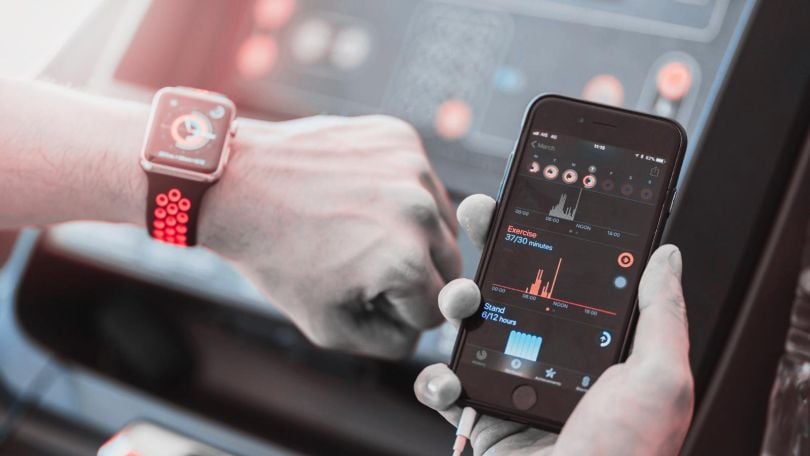
There are currently three types of novel wearable devices that are helping people’s health

Considering the COVID-19 outbreak, consumers are placing a premium on health monitoring and augmentation as they work toward a healthier way of living. As a consequence, the market for wearable healthcare devices is expanding rapidly, from an anticipated USD 27.29 billion in 2022 to an anticipated USD 324.65 billion in 20321. This expansion is being fueled by the improved dependability and speed of 5G and higher networks, as well as the evolution of new technologies. In addition, emerging markets have been able to meet customer demand for new opportunities in the healthcare sector because of the sector’s unique requirements and design forms. This article provides a summary of three of the most popular categories of healthcare wearable devices, all of which can help consumers enhance their health tracking and personal safety.

Rings for Preventative Care and Sleep Monitoring
The smartwatch has become the de facto standard for wearable health monitoring, with Fitbit having become practically synonymous with the category. However, products from Apple, Samsung, and Google also make for excellent, widely accessible alternatives. However, the relative weakness of the signal strength is a basic issue with the wrist as a biomedical monitoring point. Inaccurately regressing trends from massive amounts of data gathered by early watches made them useless to medical professionals.
Finger biomedical signals can be up to ten times greater than wrist signals2.
Wearable smart rings were created by designers with the fingers in mind as a biomedical monitoring point to improve detection and measurement of the user’s critical health metrics. The ring is equipped with high-precision instruments like thermometers, accelerometers, infrared LEDs, and gyroscopes, allowing it to provide readings on par with those from expensive medical devices.
Comfort is a major factor when it comes to using a device like a ring to track your vitals while you slumber. Critical to providing more precise data with greatly reduced computational burden due to precise local measurements is the accuracy of the electronic components.
Emergency Bracelets and Pendants
While many healthcare wearables intend to integrate into daily life transparently, healthcare pendants are an emerging device helpful for seniors in sudden, life-threatening situations. They can provide 24-hour monitoring, GPS location tracking, and detect a fall event. In addition, some devices have bi-directional communication capability with family or emergency personnel via 5G cellular networks or Wi-Fi®.
While the bracelets and pendants accompany the user without using their hands, much of the operating technology is the same. For example, embedded accelerometers aid in fall detection, an essential feature for seniors given that 90 percent of seniors not receiving medical help within six hours become dependent on a nursing home3.
Transdermal Patches for Medicine Administration
A transdermal patch, which is applied to the skin and releases medication in that way, is another innovative form factor for healthcare wearable technology. These patches hold a measured dose of medication and release it steadily into the body through the skin. While the idea behind transdermal patches is straightforward, there are actually two different types of administration methods available.
Diffusion through the epidermis is the only method used by passive systems. As a result, the rate of administering can change based on the user’s skin type and the specifics of the patch. On the other hand, active dosage is more nuanced in the human organism. Microneedles, chemical enhancers, or a mild electrical current (on the order of 2-10 mA4) are all viable options for this method, which is used to drive the medicine into the epidermis at a predetermined moment. With these additions, doctors can tailor their care to each individual patient more effectively.
Iontophoresis, the process by which the electric current delivers the medicine to the skin, calls for unbroken current to flow from the patch to the epidermis. The current is applied by a machine, which speeds up the absorption of the medicine through the epidermis. This method is helpful for treating attention deficit hyperactivity disorder (ADHD) and reducing inflammation because patients’ dosage requirements differ.
Conclusion:
Even if there are obvious and essential benefits, like healthcare monitoring, aesthetics and price will still play a major role in determining whether or not a customer actually buys the product. It’s likely that customers will appreciate the advantages, but they won’t overlook the device’s unwieldy meter aesthetic or the fact that they’ll actively weigh the device’s price against its features when making a purchase decision. Therefore, device engineers must think about incorporating electronics’ functionality within the bounds of marketing insights in order to create products that consumers will actually utilize. If we can get past that barrier, widespread use of new wearable healthcare devices will improve consumers’ health by expanding their access to preventative treatment.
The first generation of smartwatches paved the way for a new generation of wearable health gadgets. They have improved accuracy, cover a wider range of health concerns, and have emerged as indispensable aids in patient assessment, diagnosis, and therapy. Wearable technologies allow doctors and patients to take a proactive, non-invasive approach to improving health outcomes and quality of life.

Other Articles

What is security automation?
Providing 100% Optical Fiber Internet Service – Hyperoptic