



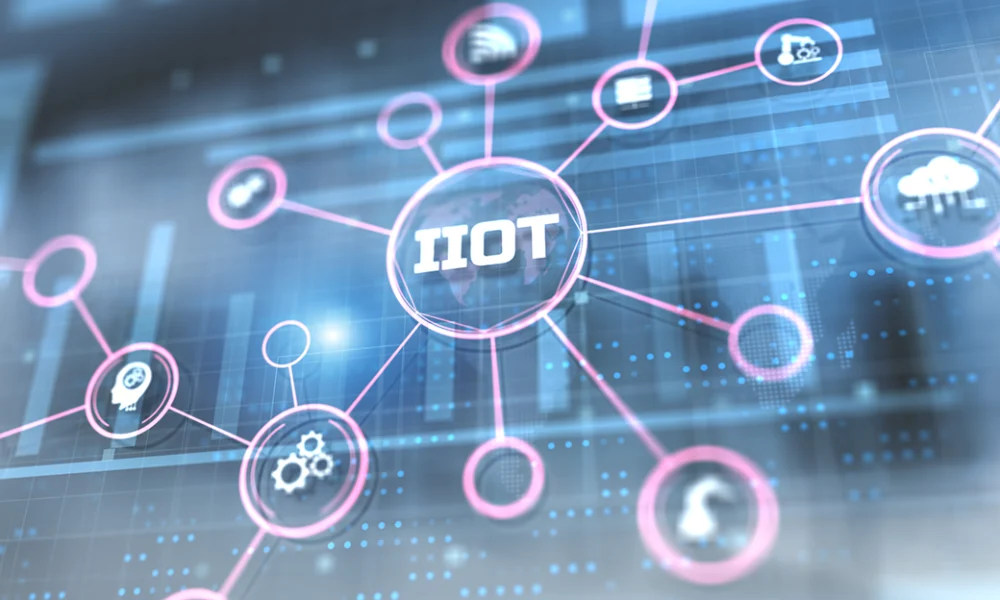

It is expected that by 20221, global spending on the IoT would have reached $1 trillion, substantially tripling the size of the market from 2021. Surprisingly, however, the rise in popularity of internet-connected devices is not due to technological advances or even to web-based services. Instead, 85 percent of enterprises in the industrial manufacturing sector were adopters, according to HFS Research.
Production rate optimization and increased data collection for improved operations insights are two examples of these well-known benefits that have been incorporated into industrial manufacturing over time as separate functional improvements. Manufacturers will be able to reap the full benefits of this “industrial IoT” (IIoT) driving their industries forward if they adopt a more holistic approach to connecting the IT infrastructure with the OT to create the smart factory.
The IIoT paves the way for the intelligent factory in a number of ways (albeit there are still obstacles to overcome). But before delving into those, it’s worthwhile to analyze the features that set a smart factory apart from a conventional one.
Smart Factory Characteristics
In a smart factory, the distinction lies in the integration of digital data with actual plant equipment to increase output. By adding more sensors and automating controls, Cyber-Physical Systems (CPS) in manufacturing have three main characteristics: asset connectivity, performance/trend visibility, and operator autonomy.
Operators can access the machinery via digital and tactile interfaces that work in tandem. With this link, they can see the virtualized state of the equipment in real time. By gaining deeper understanding of the process as it is being carried out, operators can keep a closer eye on things while spending less time actively monitoring the machines.
Data collection and the analysis needed by engineers to decipher process operation is another feature of smart factories. Additionally, servers, either locally or in the cloud, are required to process and store the increased data volume; this was not a requirement for the previous infrastructure.
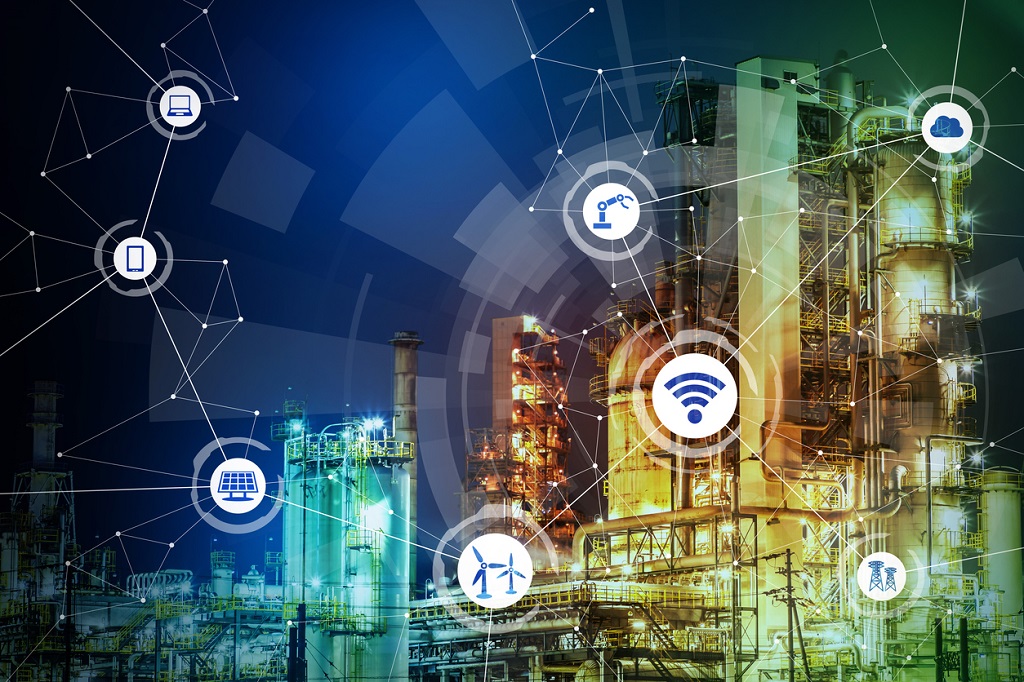
Benefits of the Smart Factory
The various benefits of the IIoT are what are driving the 85 percent adoption rate in industrial manufacturing. The first is the proven benefits that incorporating AI and ML into manufacturing processes has brought about historically:
- Improved inventory control – Historically, inventory was a high-priority KPI; collecting insights into production flow permits lower inventory while also increasing resilience/component availability, which is a known downside of just-in-time (JIT) manufacturing. Using analytics, you may find the sweet spot while eliminating supply risk. With this enhancement, we can save money on both order administration and inventory storage.
- Lower production cost through higher Overall Equipment Effectiveness (OEE) – The smart factory optimizes output based on historical data and AI-generated forecasts of future demand. This method also enhances output and energy efficiency through asset optimization.
- Improved quality and lower scrap –Operators can gain valuable insight into equipment lifespans by gathering massive amounts of data throughout production. With this perspective, they can identify wear patterns on tools and anticipate the next (possible) point-of-failure. When thinking about run rates and aiming to eliminate process waste through lean initiatives, predictive maintenance’s reduced repair cost and downtime to execute it is a key advantage.
With these three seeming enhancements, the IIoT promotes decentralization and thus further enables the smart factory. In response to the recent disruptions in the global supply chain, several companies shifted to a more vertically integrated approach in order to speed up the qualification of new suppliers and increase their oversight of product quality and timely component deliveries. Connecting suppliers’ assets to a shared network can help an intelligent factory without vertical integration as more organizations deploy IIoT solutions down the supply chain.
In addition, this capacity improves the supplier’s ability to collaborate with other businesses by giving new partners visibility into the supplier’s process capabilities without the need for time-consuming quality audits or process reviews. The widespread adoption of IIoT in manufacturing also makes it easier to develop industry standards for verifying a partner’s proficiency with the new technologies.
Improved customisation options and product—or manufacturing—as-a-service are two examples of how IIoT facilitates the development of new revenue streams for businesses. Quality will be achieved by continual improvement of the entire manufacturing process as a result of increased data collection and analytics.
Finally, when IT and OT are combined, it is possible to speed up iterative changes in product development or process improvement/troubleshooting by using virtual simulations instead of cutting physical parts.
Smart Factory Challenges
The IIoT-enabled smart factory has many benefits, but it also presents some obstacles that enterprises must address.
The first is the money needed to get started with all the new digital processing and data collection equipment. The business case needs to take into account the whole impact of the investment, which might include things like modularizing data collection/processing tools, cutting down on inventories, and minimizing downtime.
In addition, it can be difficult to combine new technologies with older systems. A new integrated architecture can be built more quickly, but it may not be feasible. Increased reliance on a connected factory makes it imperative that any retrofitting of a factory with IIoT equipment take into account non-negotiables like connectivity, network resiliency, and cybersecurity.
Finally, it’s crucial to have the right set of skills to apply the technology correctly, such as the ability to accurately predict future network traffic and data processing demands.
Conclusion
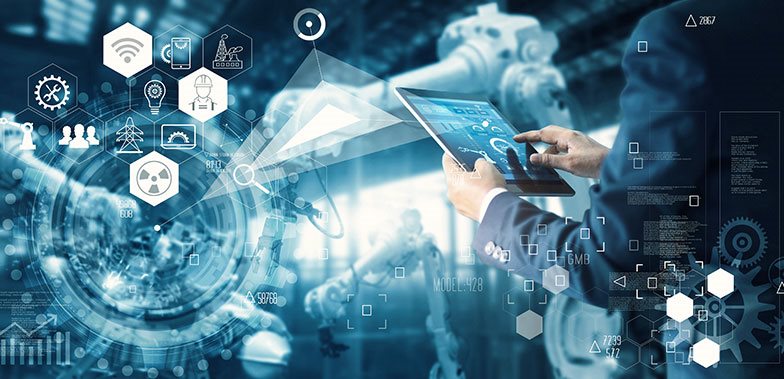
Industrial manufacturing is racing into Industry 4.0 thanks to near-universal adoption of the IIoT, despite the fact that firms constantly face problems when adopting disruptive shifts to an industry. Manufacturers can benefit from more connection, visibility, and autonomy by optimizing inventories, reducing operational costs, and increasing quality. Furthermore, the IIoT allows for the possibility of a standardized, decentralized, connected supply chain. This final condition, together with the resulting speedier product and process development advances, has brought industrial production to an exciting inflection point.